


Working at Heights Training: Risks, Regulations and Fall Prevention

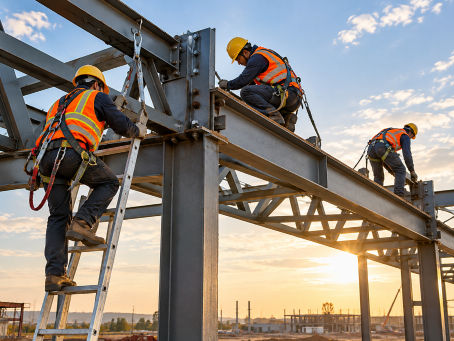
Working at height can be part of everyday work in construction, maintenance, warehousing and other industries. Falling from a ladder, roof, scaffold or elevated platform can lead to serious injuries. You must know the hazards in the workplace and follow safe procedures to protect employees.
Working at heights training helps workers to identify fall hazards, use safety equipment properly and understand their responsibilities. Edwin O Sullivan Training Solutions provides training to enable workers to develop safety awareness and precautions required for working at height. In Ireland, employers must plan work at height, assess the risks, provide suitable equipment, and ensure workers are competent to do their jobs safely.
Table of Contents
What Is Working at Heights Training?
What Are the Main Risks of Working at Height?
What Regulations Apply to Working at Height in Ireland?
How Do You Carry Out a Working at Heights Risk Assessment?
How Can Employers Prevent Falls at Work?
What Safety Equipment Should Workers Use?
Why Is Working at Heights Training Important?
Where Can You Find Working at Heights Training in Cork?
What Is Working at Heights Training?
Heights Training includes work at open edges, unstable roofs, ladders and excavations where a person could fall and be injured. Also, working at heights training teaches employees how to recognise fall hazards, implement safe work practices and use the appropriate fall protection equipment.
Training could include hazard identification, ladder and platform safety, personal protective equipment (PPE), harness and lanyard awareness, equipment inspections and emergency procedures. It also helps workers know what they have to do before, during, and after a task. Employees should know how to report hazards, when situations call for stopping work, and when equipment is unsafe.
What Are the Main Risks of Working at Height?
Working at heights is not only about the potential of falling from a towering structure. A relatively low fall can also produce serious injuries.
Typical risks are:
• Falls from scaffolding and ladders: Wrong placement, unstable surfaces, or hazardous access can cause accidents.
• Fragile roof surfaces: Roof lights and rotting roofing material can break under the weight of a person.
• Falling objects: Tools and materials may injure workers below.
• Bad weather: Rain, high winds, and slick surfaces can make elevated work dangerous.
• Lack of safety equipment: Insufficient anchor points, damaged harnesses, or faulty access equipment could increase the risk.A working at heights risk assessment helps employers identify these hazards and determine the appropriate safety measures before work begins.
By knowing the risks beforehand, employers can take the right precautions to prevent unnecessary incidents.
What Regulations Apply to Working at Height in Ireland?
Work at heights in Ireland is governed by the Safety, Health and Welfare at Work Act 2005 and relevant sections of the Safety, Health and Welfare at Work (General Application) Regulations 2007. Employers must plan, supervise and carry out work at height safely. They must also ensure workers are competent, evaluate risks, and select the right tools for the task.
Employees also have duties. They must work safely, operate equipment correctly, report any defects, and must not do anything that could endanger themselves or others. A training program helps to ensure workplace safety, but it does not instantaneously qualify all employees for all jobs, and it does not replace the legal duties of an employer.
How Do You Carry Out a Working at Heights Risk Assessment?
A risk assessment for working at height identifies potential risks, considers who may be affected by those risks, and defines the necessary safety measures before work begins. It should be true to the task, the workspace, and the tools being used.
Follow these steps:
1. Identification of Hazards: Check for electrical hazards, unstable ladders, overhead obstructions, open edges, and slippery surfaces.
2. Assessment of risk. Think about the chance a person would trip and fall or have an accident and how serious the injury could be.
3. Choose control measures: Avoid working at height where possible. If not, beware and wear the correct gear.
4. Plan the work: Establish safe access, supervision, suitable weather conditions, and emergency arrangements.
5. Review the assessment: Review when the situation, tools, or work activities change.
The Health and Safety Authority (HSA) recommends that companies prioritise the prevention of falls by using appropriate collective protection such as guardrails and working platforms rather than measures which merely reduce the consequences of a fall.
How Can Employers Prevent Falls at Work?
Good planning is the first step in fall prevention, not just expecting workers to be careful. Consider whether a task can be completed safely from ground level before arranging elevated work. Use the right platforms, scaffolding, edge protection, and safe access systems when working at height. Maintain work areas in a clean and orderly condition. Store tools in their proper places. Control access to hazardous areas.
Ladders should be appropriate to the task, and used only where the risk assessment indicates that they should be used. Workers should never use damaged equipment and should not overreach. Also to be considered are the weather conditions, when working outdoors in particular. If wind, rain, or slippery surfaces make a task unsafe, work should be postponed until conditions improve.Finally, employers need to put in place an emergency and rescue plan. Workers need to be trained in how to raise the alarm, and how the rescue is to be carried out, if a fall-arrest harness leaves a person hanging after a fall.
What Safety Equipment Should Workers Use?
The right equipment will be determined by the task and the findings of the risk assessment.
Typical choices are:
• Guardrails and working platforms: Provide physical protection to help prevent falls.
• Safety harnesses and lanyards: When properly selected and used, they are components of appropriate personal fall-protection systems.
• Safety helmets and protective footwear: Assist you with relevant head-injury and slipping hazards.
• Ladders and scaffolding: Provide access when properly selected, installed and used. • Inspection equipment and checklists: Assist workers to identify visible damage and defects before use.Workers should check the equipment before use and follow the manufacturer’s instructions. Any defects should be reported immediately. The harness must be properly fitted and attached to the correct anchor points as specified by the system.Safety does not come from equipment alone. Proper training, supervision, maintenance, and rescue planning are just as important.
Why Is Working at Heights Training Important?
Training helps employees to recognise hazards and implement safer working practices in real workplace scenarios. It can also improve awareness of equipment limitations, inspection procedures and emergency responses. Training appropriately is one of the ways that employers can fulfill their responsibilities to provide a safe workplace. Training should be chosen that is appropriate to the work being done and the degree of risk.
Edwin O Sullivan Training Solutions provides working at heights training, Irish safety legislation, hazards of work-at-height, PPE, harness and lanyard awareness, pre-use inspections and emergency procedures. The course features a theory test and a live practical assessment to help develop knowledge and practical awareness for participants. The provider says its working at heights course takes around three hours and is available via live online, blended and on-site delivery. Before booking, businesses should verify that course arrangements are current and appropriate for their staff.
Where Can You Find Working at Heights Training in Cork?
Cork businesses can look at working at heights training in Cork that includes the hazards of the workplace, the equipment involved, and the responsibilities of employees. Edwin O Sullivan Training Solutions is a Cork-based company in Midleton that offers health and safety training to businesses throughout Cork and Ireland. Its at-heights working course covers risk awareness, fall protection measures, harness and lanyard pre-use checks, and relevant safety responsibilities.
Flexible delivery options can help businesses accommodate training needs around operational requirements. But employers should check the course taken matches the competency needs of the specific work their employees do.
Final Thoughts
Falls can have a huge impact, but occupational hazards can be reduced by good planning, proper equipment, effective risk assessments and appropriate training. Working at heights training is an important part of preparing employees to recognise risks and follow safer procedures.
Ready to take workplace safety seriously? If you are a company looking to raise awareness of work at height safety, book your training with Edwin O. Sullivan Training Solutions today.
Frequently Asked Questions
1. Is working at heights training mandatory in Ireland?
Employers must make sure that workers are competent to carry out work at height safely. Training should be task, equipment-, and risk-related.
2. What does a working at heights course include?
Possible subjects may be fall hazards, Irish safety legislation, risk assessments, PPE, harness and lanyard awareness, equipment inspections and emergency procedures.
3. How long is working at heights training for?
The course listed by Edwin O Sullivan Training Solutions is approximately three hours in length. The length of time may be different depending on the training program and requirements.
4. Does working at heights training include a safety harness?
The provider’s course includes harness and lanyard awareness, including pre-use fitting and inspection. Check the practical scope before booking if your work requires specialist equipment skills.
5. How often do you need to renew working at heights training?
There is no one renewal period for all work at height activities. Employers should regularly review competence and arrange refresher training as required by changing risks, equipment, procedures or observed skill gaps.


